Forest Road 76 & 86 Closure
Ride Guide
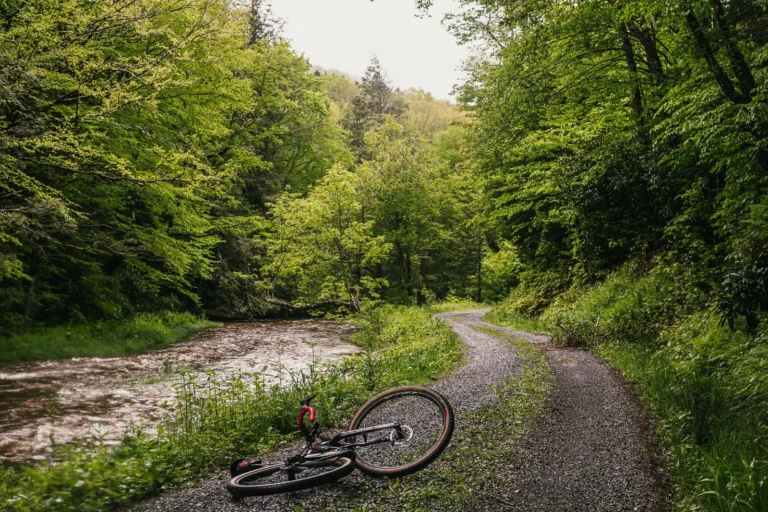
This signature loop up the Williams River and down the Cranberry River showcases some of the most beloved riding and fishing country in the Monongahela National Forest. Inspired by route ideas from local rider Sam Barger, the ride traces two storied mountain streams that have long drawn travelers to this remote corner of Webster and Pocahontas Counties.
The route follows the gentle grades of the Williams River upstream through a wide forested valley before crossing the divide and descending along the Cranberry River, forming a natural loop between two of West Virginia’s premier trout fisheries.
Although the lower portion of the Williams River road has been paved in recent years, the loop still retains long stretches of gravel, light traffic, and the feeling of deep backcountry travel. One of the defining features of riding here is the extraordinary public access to national forest land — dispersed camping opportunities appear throughout the route, making it easy to turn the ride into a relaxed bikepacking sojourn.
The ride also passes near the Tea Creek Trails system, a popular network for mountain biking and hiking, and skirts the northeastern edge of the rugged Cranberry Wilderness, one of the largest designated wilderness areas in West Virginia.
Much of the descent along the Cranberry River follows a gated forest road closed to motorized vehicles, creating a peaceful stretch of car-free riding. Several Adirondack-style backcountry shelters exist along the route, offering excellent options for resting or overnight camping. Just before the gated section begins, consider a short detour to the Cranberry Glades Botanical Area, where an accessible observation deck and boardwalk provide a fascinating look at the rare high-elevation bog ecosystem that makes this landscape so unique.
There are no reliable resupply options along this route. The only potential stop is the Cranberry Mountain Nature Center midway, which offers a small selection of snacks and ice cream bars when open, though hours are seasonal and limited. Riders should plan food and water accordingly.